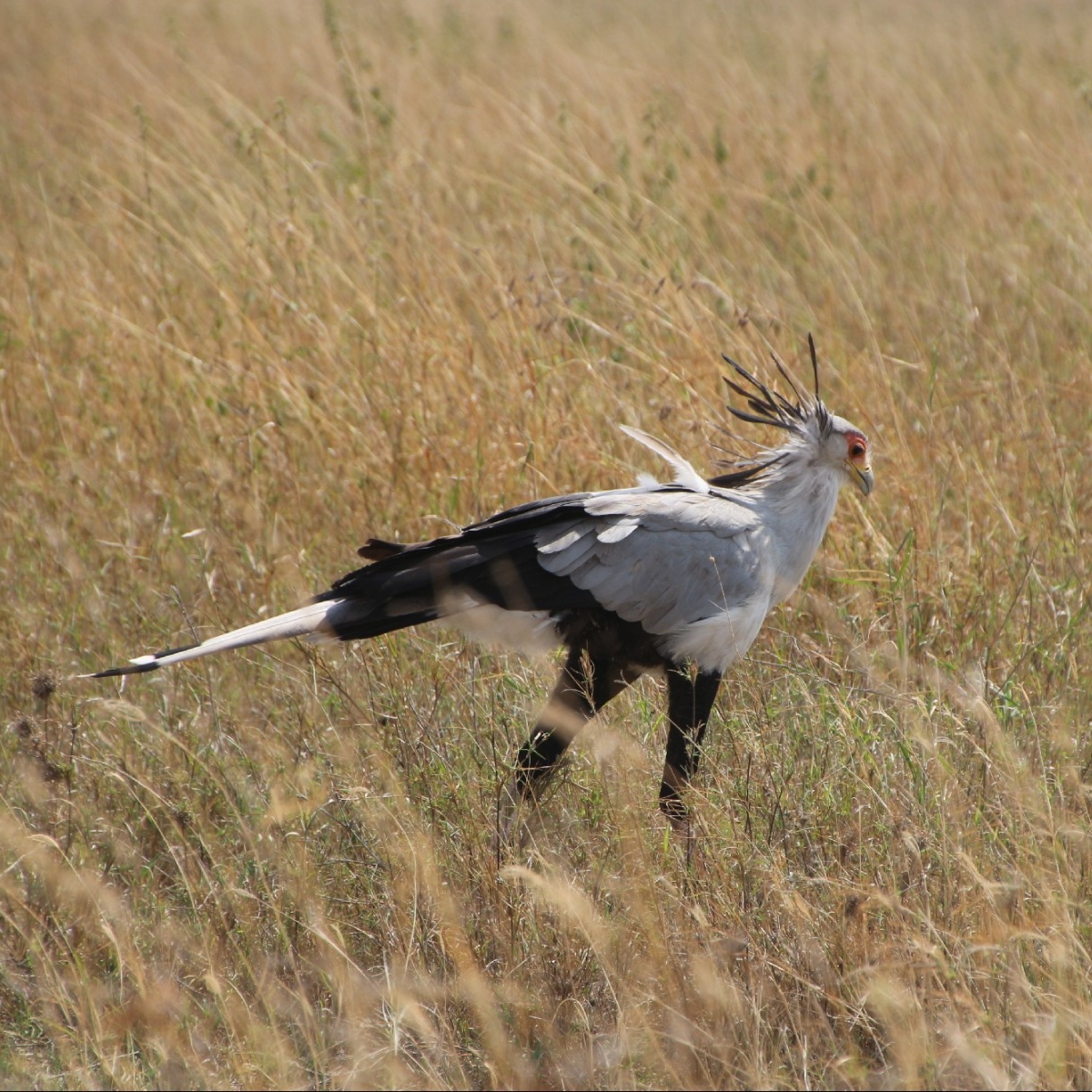
A 7-day bird watching and wildlife safari in Uganda perfectly combines the "holy grail" of African birding with iconic big game and primate viewing. With over 1,000 recorded bird species, a week-long journey provides an action-packed adventure across diverse ecosystems
7-days-best-uganda-birding-safari-tour
Day 1: Entebbe to Mabamba Swamp
Your incredible 1 week 7 days birding watching Uganda safari and wildlife expedition kicks off with an early morning excursion to the famous Mabamba Swamp on Lake Victoria. Boarding traditional motorized wooden canoes, you will navigate the narrow, winding papyrus channels in search of Africa’s most coveted avian giant: the prehistoric Shoebill Stork. As the morning mist lifts, keep your binoculars locked on the reed beds to spot other swamp specialists, including the brilliant Papyrus Gonolek, the delicate Lesser Jacana, and the Blue-breasted Bee-eater hunting over the water. In the afternoon, you will transfer back to land for a relaxing, slow-paced introductory walk through the lush Entebbe Botanical Gardens. This serene lakeside habitat offers a fantastic first look at Uganda's common residents, allowing you to easily tick off the massive Black-and-white Casqued Hornbill, the raucous African Grey Parrot, and various vibrant sunbirds, setting a spectacular tone for the week ahead.
Day 2: Transfer to Kibale National Park
On the second day of this 1 week 7 days birding watching Uganda safari and wildlife journey, you will travel west through a changing landscape of rolling hills, vibrant green tea plantations, and bustling rural villages. Your destination is the lush, ancient tropical rainforest of Kibale National Park, globally celebrated as the primate capital of East Africa but equally revered by international birders. As you approach the park boundaries, the forest fringes and roadside woodlands come alive with avian activity. Your expert guide will help you scan the dense canopy layers to spot iconic species, including the magnificent, oversized Great Blue Turaco bouncing among the branches, flocks of loud African Grey Parrots flying overhead, and the elusive Ross's Turaco. Arriving at your eco-lodge in the evening, you will fall asleep to the deep, enchanting nighttime symphony of the equatorial rainforest.
Day 3: Chimpanzee Tracking & Bigodi Wetland
An exhilarating morning awaits as you venture deep into Kibale’s interior to track habituated chimpanzees. While walking beneath the towering mahogany trees, this 1 week 7 days birding watching Uganda safari and wildlife tour showcases its dual nature, allowing you to spot secretive forest birds like the rare Green-breasted Pitta while tracking primates. In the afternoon, the focus shifts to the community-managed Bigodi Wetland Sanctuary. A guided wooden boardwalk trail carries you through an absolute paradise for water and forest edge birds. Bigodi is incredibly rich in colorful turacos, and you can easily observe up to eight distinct primate species feeding alongside spectacular birds, including the Joyful Greenbul, White-spotted Flufftail, Hairy-breasted Barbet, and the striking Papyrus Canary. This immersive day perfectly blends intense forest birding with unforgettable, close-up primate encounters in their completely undisturbed natural habitat.
Day 4: Queen Elizabeth National Park
Leaving the dense forest behind, you will drive south into the expansive, sun-drenched savannahs of Queen Elizabeth National Park. This segment of your 1 week 7 days birding watching Uganda safari and wildlife adventure completely transforms your visual perspective, opening up sweeping grasslands framed by the dramatic Rwenzori Mountains. The afternoon features a legendary two-hour boat launch cruise along the historic Kazinga Channel, a natural waterway connecting Lake Edward and Lake George. The muddy shorelines are literally carpeted with one of Africa's densest concentrations of wallowing hippos, drinking elephants, and Nile crocodiles. For birders, the channel is an absolute masterclass in waterbird viewing; you will glide within meters of massive flocks of African Skimmers, Great White Pelicans, Yellow-billed Storks, Martial Eagles scanning from above, and multiple dazzling species of kingfishers actively hunting along the reeds.
Day 5: Ishasha Sector to Bwindi Impenetrable Forest
This morning, you will head into the park’s southern Ishasha sector, a wild and rugged landscape of open acacia woodlands. This specialized leg of the 1 week 7 days birding watching Uganda safari and wildlife circuit is famous for its unique population of tree-climbing lions, which lounge lazily on the low branches of giant fig trees to escape the midday heat. While scanning the branches for big cats, you will target impressive savannah raptors like the Bateleur and Ruppell's Griffon Vulture. In the afternoon, you will leave the lowlands behind, climbing steadily up into the cool, mist-shrouded hills of Bwindi Impenetrable National Park. As the air cools and the vegetation turns into a dense, ancient montane rainforest, you enter a globally recognized biodiversity hotspot that shelters some of the rarest and most localized birds on the entire African continent.
Day 6: Gorilla Trekking & Forest Birding
Today delivers an unforgettable, once-in-a-lifetime wildlife highlight as you trek into the rugged interior of Bwindi to spend an hour with a family of endangered mountain gorillas. As you forge paths through the thick undergrowth, this 1 week 7 days birding watching Uganda safari and wildlife itinerary offers an extraordinary backdrop for high-altitude ornithology. Bwindi is the ultimate anchor point for Albertine Rift Endemics, and your specialized guide will keep you alert for rare avian gems flitting through the bamboo zones and deep valleys. Keep a sharp eye out along the mountain trails for the spectacular Rwenzori Turaco, the secretive Handsome Francolin, the Black-billed Turaco, and the regal Regal Sunbird. Combining the profound emotional experience of sitting near wild mountain gorillas with world-class, high-end forest birding makes this day an absolute crown jewel of the trip.
Day 7: Lake Mburo & Return to Kampala/Entebbe
On the final day of your 1 week 7 days birding watching Uganda safari and wildlife expedition, you will drive east to Lake Mburo National Park, a charming gem dominated by extensive acacia woodlands and quiet lakes. Here, you will enjoy a focused morning game drive targeting specialized, acacia-associated bird species found nowhere else on this route, such as the localized Red-faced Barbet, Long-tailed Cisticola, and the striking African Finfoot swimming along the quiet river fringes. You will also enjoy great views of large mammal herds, including impalas, topis, and herds of Burchell's zebras. Afterward, you will begin the return journey back toward Entebbe or Kampala, pausing for a memorable lunch and photography stop at the Equator crossing line. Arriving in the evening, your clients will head home with full camera memory cards and a completed African lifelist.
1. What can realistically be achieved on a 1 week 7 days birding watching Uganda safari and wildlife tour compared to a longer itinerary?
A one-week itinerary is a high-intensity, strategically condensed route designed to maximize species counts within a limited timeframe. While a longer 17-day safari allows for deep exploration of remote corners like Kidepo or the extensive montane loops of Bwindi and Semuliki, a 1 week 7 days birding watching Uganda safari and wildlife tour focuses sharply on a high-yield "western circuit" or a targeted "savannah and wetland loop." Realistically, this allows clients to cross off between 250 and 350 bird species alongside a spectacular variety of classic African mammals, including elephants, hippos, zebras, and habituated primates like chimpanzees.
The primary achievement of this condensed timeline is the sheer efficiency of habitat exposure. Within just seven days, clients transition systematically from the massive, freshwater papyrus wetlands of Lake Victoria to the dense equatorial rainforests of Kibale, and finally into the expansive rift valley savannahs of Queen Elizabeth National Park or Lake Mburo. This rapid shifting of ecological zones guarantees an explosive lifelist growth early in the trip.
However, because travel days double as field sessions, the pace is undeniably brisk. Clients will spend less time tracking down single, hyper-localized forest floor skulkers that require days of patience. Instead, the focus shifts to highly visible canopy flocks, riverine waterbirds, and conspicuous savannah raptors and passerines. It is the ultimate option for birders who want to experience Uganda’s signature wildlife highlights and core avian targets without a major multi-week time commitment. This compact format delivers a balanced, high-yield combination of world-class birding, big game viewing, and primate tracking, making every single hour in the field count toward a highly successful African expedition.
2. How critical is Mabamba Swamp to this specific 7-day birding and wildlife itinerary?
Mabamba Swamp is the absolute operational anchor and an irreplaceable highlight of the 1 week 7 days birding watching Uganda safari and wildlife itinerary. Located on the edge of Lake Victoria near Entebbe, this expansive Ramsar site provides the most accessible and reliable opportunity in the world to encounter the highly coveted, prehistoric-looking Shoebill Stork. Because a seven-day tour has zero room for logistical delays, placing Mabamba on Day 1 ensures that clients target their most highly anticipated avian lifer immediately upon arrival, injecting massive excitement into the very start of the journey.
Navigating the narrow, winding channels of the swamp in traditional wooden motorized canoes allows birders to glide silently within meters of the thick papyrus stands. The Shoebill is a solitary, patient hunter that stands completely motionless for hours waiting for lungfish, making it an exceptional subject for close-range observation and photography. Local community guides track these magnificent birds daily, pushing the sighting success rate to nearly 99% in recent years.
Beyond the iconic Shoebill, Mabamba acts as an immediate introduction to Uganda's rich wetland avifauna. Within a single morning session, clients can easily tick off dozens of specialized waterbirds that would be difficult to find elsewhere on a short western loop. Key targets include the striking Papyrus Gonolek, Lesser Jacana, Blue-breasted Bee-eater, Purple Swamphen, Squacco Heron, and Malachite Kingfisher. Furthermore, the marsh offers occasional glimpses of rare wetland mammals, such as the elusive, swamp-dwelling Sitatunga antelope. By combining a global-tier birding target with a unique aquatic boat safari, Mabamba sets an elite standard for the rest of the week’s wildlife viewing.
3. What is the best time of year to run this compact 7-day birding and wildlife loop?
Choosing the optimal time of year is vital for a 1 week 7 days birding watching Uganda safari and wildlife tour because a short itinerary cannot afford weather-induced downtime or washed-out forest trails. Uganda is an equatorial country with two distinct dry seasons: June to August and December to February. These dry windows are widely considered the gold standard for a brief safari. Lower rainfall ensures that forest tracks in Kibale or Bigodi are highly navigable, visibility through the canopy is clear, and savannah roads remain firm, maximizing actual field time.
However, if your clients are focused on achieving the highest possible species checklist within seven days, the transitional months from October to November and March to April present an extraordinary alternative. These periods align with the massive annual influx of Palearctic and Intra-African migratory birds. During these months, the savannahs and water channels of Queen Elizabeth or Murchison Falls fill with thousands of migratory waders, terns, and raptors fleeing the northern winter, pushing daily species counts to their absolute peak.
Furthermore, many resident species display vibrant breeding plumage and call conspicuously during these slightly wetter months to establish territories. The trade-off is a higher likelihood of short, heavy afternoon downpours, which can temporarily disrupt birding sessions. For a tight 7-day loop, the short dry season of January and February often strikes the perfect balance—offering excellent weather for chimpanzee or gorilla tracking, high visibility for savannah big game, and the added bonus of still hosting a massive selection of wintering Palearctic migrants along the Kazinga Channel or the Victoria Nile.
4. How does the itinerary balance intensive bird watching with classic African big game viewing?
The magic of a well-structured 1 week 7 days birding watching Uganda safari and wildlife itinerary lies in its deliberate, dual-purpose design. Rather than treating birding and mammal tracking as separate activities, an expert guide seamlessly blends them into every field session. When driving through the savannah tracks of Queen Elizabeth National Park or Lake Mburo, the vehicle moves at a slow, deliberate pace that satisfies both the serious birder scanning the acacia tops and the wildlife enthusiast looking for large African mammals.
For example, a morning game drive across the Kasenyi plains is highly rewarding for both interests. As clients stop to photograph a pride of lions resting after a hunt or a herd of Cape buffaloes grazing in the early light, the trees and grasslands surrounding these animals are alive with avian activity. While waiting for a leopard to move, birders can comfortably tick off the Martial Eagle perched in a distant euphorbia tree, Temminck's Coursers running along the tracks, and elegant Grey Crowned Cranes dancing in the open fields.
This balance prevents "safari fatigue" and ensures that every participant, regardless of their specific interest, remains fully engaged. The transitions between habitats are smooth; a morning spent tracking a herd of elephants across the savannah naturally evolves into an afternoon boat cruise where waterbirds like the African Skimmer and giant Nile crocodiles share the exact same shoreline. By selecting parks that boast a high density of both big game and unique avifauna, this short itinerary proves that you do not need to sacrifice classic African wildlife viewing to enjoy a world-class birding experience.
5. What role does Kibale National Park play on a 1-week birding and wildlife itinerary?
Kibale National Park serves as the premier tropical forest anchor for a 1 week 7 days birding watching Uganda safari and wildlife tour. Known globally as the primate capital of East Africa due to its dense population of 13 distinct species, Kibale is equally critical for ornithologists, boasting an impressive checklist of over 375 bird species. On a short 7-day route, Kibale provides the necessary exposure to a pristine, mid-altitude canopy ecosystem that contrasts beautifully with the open savannahs visited later in the week.
The ultimate avian prize hidden within Kibale’s interior is the rare and highly enigmatic Green-breasted Pitta. Finding this brilliantly colored, secretive forest floor dweller requires an early pre-dawn start, as the bird is famous for its brief, mechanical wing-clapping courtship display performed just as the very first morning light penetrates the dense foliage. Even if the pitta remains elusive during a short visit, the surrounding forest canopy is exceptionally rich with other high-value species, including the Joyful Greenbul, Grey-winged Robin-chat, and White-naped Pigeon.
Logistically, Kibale is highly efficient for a one-week loop because it allows for an unforgettable primate and avian double-feature. During a single morning session, clients can participate in chimpanzee tracking, watching a wild community feed and play in the canopy, while simultaneously listening to and spotting specialized forest birds like the Black-and-white Casqued Hornbill or the Western Nicator. This high concentration of globally unique wildlife ensures that Kibale delivers maximum value and iconic highlights in a compressed timeframe, making it an indispensable stop on any short Ugandan safari.
6. Why is the Bigodi Wetland Sanctuary a mandatory stop on a short 7-day birding loop?
The Bigodi Wetland Sanctuary, located right on the fringes of Kibale National Park, is a mandatory addition to a 1 week 7 days birding watching Uganda safari and wildlife itinerary because it offers an exceptionally high concentration of species along a highly accessible trail. Managed directly by the local community, this dense papyrus and riverine forest swamp acts as an important wildlife corridor, compressing a massive diversity of forest edge birds, waterbirds, and primates into a relatively small, easy-to-explore area.
For a 7-day itinerary where time is a premium, Bigodi delivers quick rewards. A leisurely three-hour guided walk along its well-maintained dirt trails and elevated wooden boardwalks can easily yield up to 40 or 50 distinct bird species. The undisputed star of the sanctuary is the spectacular Great Blue Turaco, a massive, brightly colored bird that can frequently be seen in large numbers bouncing clumsily among the fruiting trees.
Clients will also actively search the dense swamp vegetation for the Papyrus Canary, White-winged Warbler, Hairy-breasted Barbet, and the beautiful, secretive White-spotted Flufftail. Because the wetland features a more open canopy than the interior of Kibale Forest, lighting conditions are significantly better, making it a premier hotspot for bird photography. Furthermore, Bigodi is famous for its incredible primate viewing; it is common to spot up to five or six different species—including the Uganda Red Colobus, Guereza Colobus, and Grey-cheeked Mangabey—feeding right alongside the birds. This seamless combination of easy walking conditions, rich avifauna, and active primates makes Bigodi an incredibly efficient, high-yield field session.
7. What makes the Kazinga Channel boat cruise a premier highlight for a 7-day wildlife safari?
The boat launch cruise along the Kazinga Channel in Queen Elizabeth National Park is widely considered one of the greatest wildlife spectacles in Africa, making it a non-negotiable anchor for a 1 week 7 days birding watching Uganda safari and wildlife tour. This natural 32-kilometer waterway connects Lake Edward and Lake George, drawing an incredible concentration of large mammals and waterbirds to its fertile oasis shores year-round, regardless of the season.
From a birding perspective, the channel provides an unparalleled opportunity to observe and photograph birds at incredibly close range. Because the birds are entirely habituated to the daily passage of stable double-decker explorer boats, they do not fly away as the vessel glides silently along the banks. This allows clients to capture pristine, unobstructed shots of massive flocks of African Skimmers cutting through the water's surface, Great White and Pink-backed Pelicans preening, Yellow-billed Storks hunting, and vibrant colonies of Pied and Malachite Kingfishers nesting in the vertical mud banks.
For wildlife enthusiasts, the boat cruise is equally breathtaking. The shores of the Kazinga Channel shelter one of the densest populations of wallowing hippos on earth, alongside massive Nile crocodiles and large herds of elephants, Cape buffaloes, and waterbucks that come down to drink and bathe in the afternoon heat. For a compact 7-day itinerary, this two-hour excursion delivers an astonishingly high volume of both mammal and avian sightings with zero physical exertion, providing a relaxing, high-yield afternoon that consistently ranks as a favorite memory for international travelers.
8. Can Mountain Gorilla trekking be realistically included in a 1 week 7 days birding watching Uganda safari and wildlife tour?
Yes, mountain gorilla trekking can absolutely be integrated into a 1 week 7 days birding watching Uganda safari and wildlife tour, but it requires a very specific, tightly managed geographic loop. Because Bwindi Impenetrable National Park sits in the rugged, southwestern corner of the country, including it means the itinerary must be streamlined to minimize driving times between destinations, typically focusing on a highly efficient Entebbe – Kibale – Queen Elizabeth – Bwindi – Entebbe circuit.
Including gorillas adds immense value to a short wildlife safari, transforming it into a definitive, bucket-list expedition. The trek itself takes clients deep into an ancient, montane forest ecosystem that is entirely different from the lowland forests of Kibale or the savannahs of Queen Elizabeth. While the primary, emotionally profound goal of the hike is to spend a magical hour sitting face-to-face with a habituated family of mountain gorillas, the incidental birding along the steep ridge lines and deep valleys of Bwindi is world-class.
Bwindi is a globally recognized UNESCO World Heritage Site and the ultimate hotspot for Albertine Rift Endemics (AREs). As you hike through the thick undergrowth following the gorilla trackers, your specialized birding guide will keep you alert for rare avian gems that are found nowhere else on earth. You can realistically spot the spectacular Rwenzori Turaco, the Handsome Francolin, the Rwenzori Batis, and the regal Sunbird along the forest trails. Blending Africa’s most iconic primate encounter with high-end endemic bird watching creates an incredibly rich, high-yield day that maximizes every minute of a one-week Ugandan journey.
9. What are the unique birding and wildlife highlights of Lake Mburo National Park on a short tour?
Lake Mburo National Park is a critical and logistically brilliant asset for a 1 week 7 days birding watching Uganda safari and wildlife itinerary, primarily due to its strategic geographic location. Situated halfway between the southwestern forests of Bwindi and the international airport in Entebbe, it serves as the perfect breaking point to split up a long drive while simultaneously introducing a completely unique ecological zone dominated by extensive acacia woodlands and quiet lakes.
From an avian perspective, Lake Mburo is the premier destination in Uganda to target specialized, acacia-associated bird species that are absent from the rainforests and western rift valley savannahs. Walking or driving through the park's light woodlands allows birders to quickly tick off localized targets like the rare Red-faced Barbet, Long-tailed Cisticola, Tabora Cisticola, Green Wood-hoopoe, and the Bare-faced Go-away-bird. A boat trip on the lake itself offers an excellent chance to spot the highly elusive African Finfoot swimming quietly along the overhanging riverine roots, alongside the brilliant White-backed Night Heron.
For general wildlife viewing, Lake Mburo provides a refreshing contrast to the larger parks. It is the only place on the western safari circuit where clients can see large herds of Burchell's zebras and elegant impalas, which are entirely absent from Queen Elizabeth National Park. It also supports healthy populations of topis, elands, Rothschild's giraffes, and warthogs. Because the park is free from elephants, it is one of the few places in Uganda where guided walking birding safaris are permitted, allowing clients to step out of the safari vehicle and experience the sights and sounds of the African bush completely on foot.
10. How do professional guides manage the fast pace of a 7-day birding and wildlife circuit?
Managing a compressed 1 week 7 days birding watching Uganda safari and wildlife tour requires an elite level of guiding expertise, operational discipline, and deep local knowledge. Because a seven-day timeline leaves zero margin for error, a generalist driver-guide is insufficient; the tour must be led by a specialized, professional Ugandan ornithological guide who possesses a flawless understanding of bird vocalizations, exact territorial micro-habitats, and efficient driving routes.
To keep the itinerary moving smoothly without exhausting the clients, an expert guide utilizes several tactical strategies. First, they rely heavily on "birding by ear." In dense forest environments like Kibale or Bwindi, visually searching every branch can waste hours of precious time. A specialized guide can instantly identify a bird hidden deep within a thicket simply by hearing a brief, two-note call, allowing them to precisely direct the clients' binoculars to the exact branch within seconds. This drastically increases the efficiency of each field session.
Secondly, professional guides turn necessary transit days into active, productive birding sessions. Instead of just driving blindly from one national park to the next, they schedule deliberate, pre-scouted stops at unique roadside habitats—such as a specific papyrus-fringed bridge known for Papyrus Gonoleks or a dry hillside favored by specific raptors. This ensures that travel time is never wasted time. Finally, they maintain strong, real-time communication networks with local site caretakers and park rangers, allowing them to know exactly where high-value species like the Shoebill Stork or a specific lion pride were spotted just hours prior, systematically guaranteeing a high-yield, successful wildlife experience.
11. What specific photographic gear is ideal for a fast-paced 7-day Ugandan safari?
Photographing wildlife on a fast-paced 1 week 7 days birding watching Uganda safari and wildlife tour requires a gear setup that balances high performance with exceptional portability. Because you will be constantly transitioning between enclosed safari vehicles, moving motorized boats, and intensive on-foot forest treks over a short period, bringing excessive, bulky equipment can cause unnecessary physical fatigue and slow down the daily flow of the itinerary.
For camera bodies, a modern mirrorless or DSLR system with an advanced, fast autofocus tracking system is highly recommended, especially for capturing birds in flight or primates moving rapidly through high tree canopies. Your lens choice must be highly versatile to handle two completely different lighting and distance scenarios. For the open savannahs of Queen Elizabeth and the close-range boat safaris on the Kazinga Channel, a high-quality telephoto zoom lens—such as a 100-400mm or a 200-600mm—is absolutely ideal. The flexibility of a zoom allows you to instantly adjust your framing from a wide shot of an elephant herd to a tight, close-up portrait of an African Skimmer flying low across the water.
Conversely, for the dense, low-light forest environments of Kibale and Bwindi, carrying a fast lens with a wide maximum aperture, like a 300mm f/4 or a 400mm f/2.8, is incredibly advantageous. This allows you to maintain fast shutter speeds without pushing your ISO to levels that create excessive digital noise. Because you will be walking long distances during primate tracking, a lightweight carbon-fiber monopod is far more practical than a heavy tripod. Finally, always pack high-quality waterproof rain covers to protect your gear from sudden, unexpected equatorial downpours.
12. How should clients dress for the diverse habitats of a 1-week Ugandan birding and wildlife tour?
Dressing correctly for a 1 week 7 days birding watching Uganda safari and wildlife expedition is essential for comfort, safety, and successful wildlife viewing, as the itinerary carries you through drastically different climates and environments in a very short span of time. You will experience everything from hot, sun-drenched open savannahs to cool, humid, and misty high-altitude rainforests.
For the intensive forest birding and primate tracking sections in Kibale and Bwindi, full-body protection is non-negotiable. Clients must wear long-sleeved shirts and sturdy, full-length trousers made from lightweight, moisture-wicking synthetic fabrics that dry quickly. This protects the skin from stinging nettles, sharp thorns, and biting insects like safari ants. A vital insider tip is to pack high-performance hiking socks and gaiters so you can securely tuck your trousers into your socks, preventing ground-dwelling ants from crawling up your legs while trailing wildlife off-path. Clothing colors must be strictly earth-toned—such as khaki, tan, olive green, and muted brown—to blend seamlessly into the environment. Avoid bright colors like red or yellow, which can startle shy birds, and solid blue or black, which actively attracts biting tsetse flies in certain savannah pockets.
For footwear, clients need high-quality, waterproof hiking boots with deep rubber lugs and excellent ankle support to navigate slippery, uneven forest ridges safely. Ensure these boots are thoroughly broken in months before arrival to prevent blisters. For the savannah game drives and boat cruises, a wide-brimmed sun hat, polarized sunglasses, and a lightweight, breathable waterproof rain jacket that can be quickly deployed from your daypack are essential pieces of gear to ensure a comfortable journey.
13. What are "Little Brown Jobs" (LBJs), and how are they tackled on a short safari?
In the global birding community, "Little Brown Jobs" (or LBJs) is a term used to describe the vast, challenging array of small, nondescript passerine species that feature highly uniform brown, buff, or olive plumage. In Uganda, this includes a massive diversity of cisticolas, warblers, greenbuls, larks, and pipits. To an amateur eye, these birds look virtually identical, making precise field identification notoriously difficult. On a fast-paced 1 week 7 days birding watching Uganda safari and wildlife tour, clients will encounter dozens of these cryptic species in the undergrowth of Kibale and across the open plains of Queen Elizabeth National Park.
Tackling LBJs successfully within a tight 7-day timeframe relies entirely on the skill of your specialized ornithological guide, who uses a sophisticated combination of G.I.S.S. (General Impression of Shape and Size), precise habitat micro-niches, and vocalizations. Because a short tour cannot waste hours trying to visually dissect minor feather variations on a fast-moving bird hidden in a thick bush, identifying them by ear is paramount.
Every single species of warbler and cisticola has a completely unique territorial call or song. Your expert guide will confidently identify a bird the moment it sings, turning a potentially frustrating flash of brown into a rewarding, verified addition to the client's lifelist. Furthermore, the guide will teach clients to observe subtle, diagnostic behaviors—such as whether a bird continuously wags its tail, flicks its wings, or prefers foraging strictly on the ground versus the mid-canopy. This turns the identification of cryptic species into an educational masterclass in field craft, proving that even a short one-week safari can deliver deep, highly sophisticated birding triumphs.
14. What style of accommodation and charging infrastructure can be expected on this 7-day loop?
The accommodations selected for a high-yield 1 week 7 days birding watching Uganda safari and wildlife circuit are strategically chosen to place clients directly inside or on the immediate borders of the national parks, keeping early morning transit times to an absolute minimum. These properties range from luxury eco-lodges and permanent tented camps to highly comfortable, rustic forest chalets, almost all of which feature beautifully landscaped gardens planted with native, nectar-rich flowers that attract spectacular birds right to your doorstep.
Because these lodges operate in remote wilderness areas, they typically rely on robust solar power systems or localized backup generators for electricity. In many properties, power in the individual cabins is managed contextually, meaning sockets may be active primarily during the morning and evening hours (such as 5:00 AM to 9:00 AM and 6:00 PM to 11:00 PM). It is vital to prepare your clients for this operational rhythm, ensuring they know to charge their electronics whenever power is active.
Uganda utilizes the Type G British standard three-pin plug, operating on a 240V/50Hz electrical current. Given the heavy daily demands of bird photography and wildlife viewing, clients should pack a high-quality universal travel adapter and a heavy-duty multi-plug surge protector power strip. This allows them to safely and simultaneously recharge multiple camera batteries, cell phones, tablets, and external power banks every single evening in their room or at the centralized charging station in the main lodge lounge. This ensures that their critical electronic equipment is fully powered and ready for the intensive shooting demands of the next morning’s field session.
15. What field guides and digital resources are essential for a 1-week Ugandan birding safari?
To maximize the educational value and enjoyment of a fast-paced 1 week 7 days birding watching Uganda safari and wildlife tour, having the correct reference materials on hand is absolutely essential. The undisputed print bible for this region is the Birds of East Africa (by Terry Stevenson and John Fanshawe). This definitive field guide features detailed color plates, precise distribution maps, and specific behavioral notes for every species found in Uganda, making it an invaluable tool for referencing sightings during evening checklist sessions at the lodge.
In addition to physical books, digital tools are incredibly effective for a short, fast-moving itinerary. The eBird mobile app, managed by the Cornell Lab of Ornithology, is a mandatory download before arrival. Clients can download the complete Uganda species pack, allowing them to digitally log their sightings in real-time in the field, track their personal lifelist, and view recent sightings at local hotspots like Mabamba Swamp or the Kasenyi plains.
For auditory preparation and field verification, utilizing digital audio resources like the Birds of East Africa app or downloading regional tracks from Xeno-Canto is highly advantageous. Because forest birding in places like Kibale relies so heavily on sound, listening to the distinct, chiming call of the Green-breasted Pitta or the raucous honking of a hornbill on your phone before stepping into the field will train your ears to recognize these sounds instantly when your expert guide points them out in the wild. This combination of classic print guides and modern digital technology ensures that clients can easily keep pace with the high volume of species encountered on a one-week loop.
16. Why is a well-planned itinerary structure critical to the success of a 7-day Ugandan safari?
When compressing a world-class avifauana and big game destination into a single week, the structural design of the itinerary is the ultimate deciding factor between a frustratingly rushed trip and an unforgettable, highly successful expedition. A poorly planned route can easily result in endless, exhausting hours spent driving on rough roads, leaving virtually no time for actual field birding or relaxed wildlife viewing. Therefore, a successful 1 week 7 days birding watching Uganda safari and wildlife tour must be meticulously optimized for geographic and ecological efficiency.
A premier 7-day itinerary achieves this by creating a logical, continuous loop that minimizes back-to-back driving days and strategically places major highlights at natural transition points. For instance, starting with the Shoebill at Mabamba Swamp on Day 1 utilizes the close proximity to Entebbe Airport perfectly. Moving west to Kibale allows for a concentrated forest and primate session, which sets up a short, highly scenic drive south into Queen Elizabeth National Park for classic savannah game and the Kazinga Channel boat cruise.
By avoiding long, unnecessary cross-country detours, this tight structure guarantees that clients spend less time inside the safari vehicle and more time on foot or on the water with binoculars in hand. It builds in a resilient buffer against unpredictable factors like weather or road conditions, ensuring that if a morning session is slowed down by rain, the afternoon activity still delivers high-value sightings. Ultimately, a precisely engineered itinerary transforms a short seven-day window into a seamless, high-yield journey that captures the true essence of Uganda's spectacular wildlife heritage.
Booking 1 week 7 days birding watching Uganda safari with us Roads of Adventure safaris
To book your 7-day bird-watching safari, it is highly recommended to reach out directly to Roads of Adventure Safaris, a specialized local operator based in Kampala, Uganda. Packages for 1-week excursions typically range between $1,500 and $2,500 per person and are entirely customizable to target specific bird
