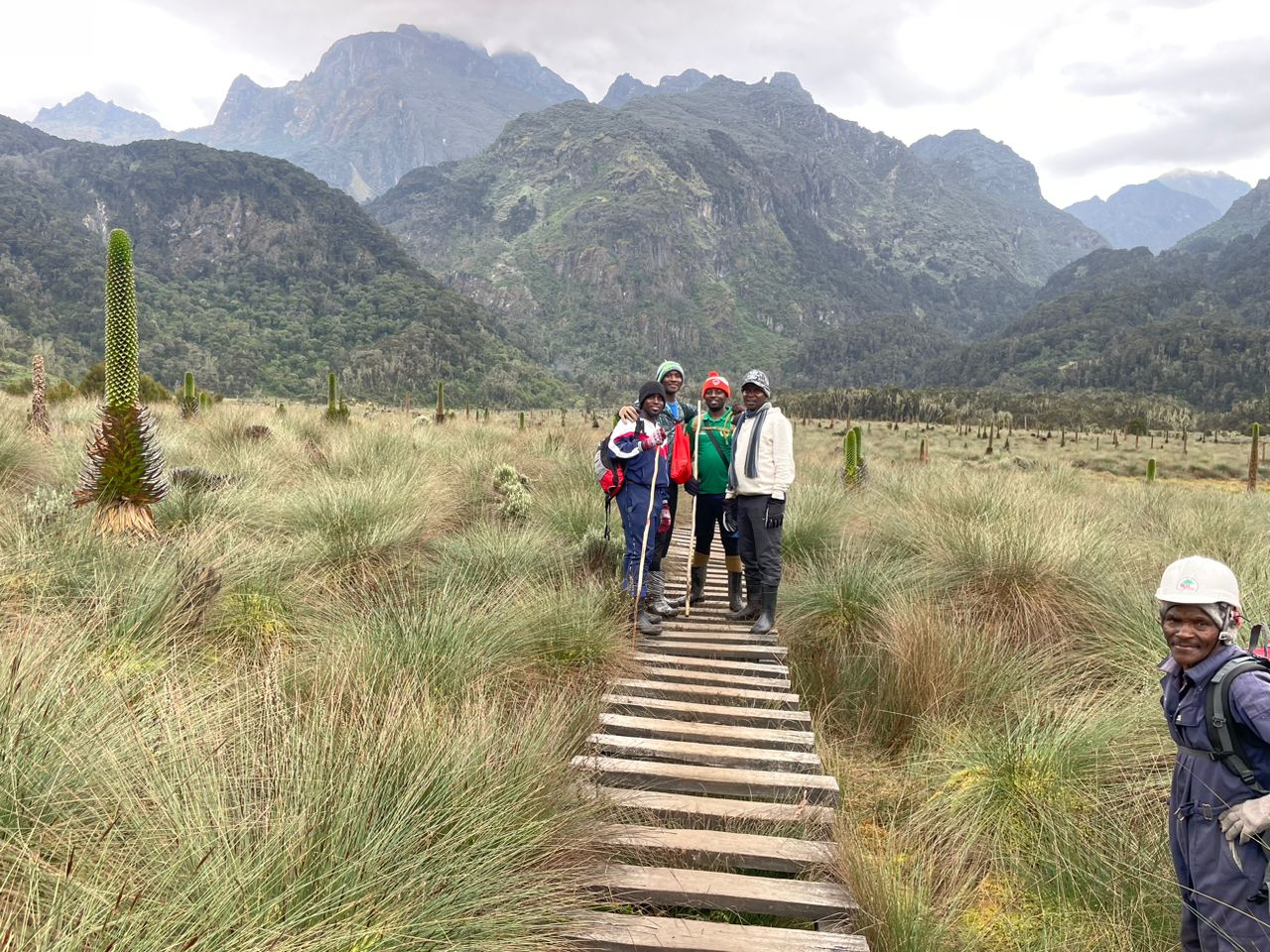
Stepping into the mist-shrouded Rwenzori Mountains is like entering a forgotten, prehistoric world. Often celebrated as the legendary "Mountains of the Moon," this UNESCO World Heritage site offers one of Africa’s most raw and mystical trekking experiences. While a full summit takes over a week, a Mountain Rwenzori hike packed into a single day delivers an unforgettable slice of this equatorial paradise. Starting from the rustic Nyakalengija Trailhead at 1,650 meters, this immersive 7 to 8-kilometer journey pulls you through dense, vibrant forests teeming with endemic wildlife and dramatic landscapes. It is a steep, muddy, and exhilarating challenge designed for those who want to feel the heartbeat of the jungle. If you are ready to trade the concrete jungle for wild, moss-covered trails, here is how your breathtaking day on the mountain unfolds, hour by unforgettable hour.
8:00 AM – 9:00 AM: Orientation and Start
Your Mountain Rwenzori hike kicks off at the Rwenzori Mountaineering Services headquarters in Nyakalengija. The air is crisp as you meet your local guide, double-check your gear, and absorb a quick safety briefing. Once you pass the park gates, the transition into the wild is instant. You are immediately enveloped by a towering montane forest, where giant trees filter the morning sun. Walking along the damp earth, you will cross small, crystal-clear streams over rustic wooden bridges. The thick, vibrant undergrowth hums with life, instantly making you realize that you have stepped somewhere truly special.
9:00 AM – 11:00 AM: Deep Montane Forest & Wildlife
As the clock ticks into the morning, your Mountain Rwenzori hike begins to test your lungs. You will climb steadily into a dense, untouched equatorial rainforest where the canopy closes overhead. This zone is a paradise for birdwatchers and primate lovers alike. If you keep your eyes peeled, you will likely spot acrobatic black-and-white colobus monkeys swinging through the branches or elegant L'Hoest's monkeys watching you from a distance. The air is filled with a symphony of exotic bird calls, occasionally punctuated by the distant, haunting echoes of wild chimpanzees calling out from the deep valleys below.
11:00 AM – 1:00 PM: The Mahoma River and Rocky Bluffs
The trail demands more focus now as your Mountain Rwenzori hike gets noticeably steeper. You will find yourself scrambling over massive rocky bluffs and navigating through a labyrinth of interwoven vines. Soon, the thunderous roar of the River Mahoma fills the air, and crossing its rushing waters is pure adrenaline. The vegetation morphs around you, becoming weirder and more beautiful. Look closely at the branches; this moist environment is the perfect hiding spot for the rare, prehistoric-looking three-horned chameleon. If fortune favors you, you might even spot fresh tracks left by elusive, shy bush pigs.
1:00 PM – 2:00 PM: Lunch and Resting Spot
Victory tastes sweet as you finally reach the absolute peak of your Mountain Rwenzori hike, sitting somewhere between 2,373 and 2,650 meters. Whether you throw down your pack at the Omusita rest stop or by the misty shores of Lake Mahoma near Nyabitaba Camp, the sense of achievement is immense. Unwrapping your packed lunch, you can finally sit back and rest your burning legs. As you eat, the shifting clouds open up to reveal jaw-dropping, sweeping vistas of the mighty Mubuku Valley below. It is a peaceful, deeply rewarding moment of silence in a truly ancient world.
2:00 PM – 4:30 PM: The Descent
After snapping a dozen photos of the unique alpine flora, it is time to turn around. Going down this Mountain Rwenzori hike requires careful footing and core strength, as the steep, muddy slopes can be beautifully chaotic. You will retrace your steps backward through the ethereal bamboo groves and changing forest zones. Gravity does the work now, giving your lungs a break so you can focus on the smaller details of the jungle. It is a fantastic time for spotting macro life, from bizarrely colorful insects to delicate orchids clinging to mossy tree trunks.
4:30 PM – 5:30 PM: Return to Nyakalengija
As the afternoon light softens, the dense canopy thins out, and you finally emerge from the official national park boundary. Walking back into the Nyakalengija trailhead, your boots will be caked in mud, and your muscles will certainly feel the burn. Your guide will welcome you back and proudly present you with an official certificate of completion. It is a beautiful token to mark the end of your short but incredibly intense Mountain Rwenzori hike, leaving you with a lifetime of stories from Africa's famous Mountains of the Moon.
What is the best fitness routine for this hike?
Preparing your body for a Mountain Rwenzori hike means focusing heavily on cardiovascular endurance and lower-body strength. Because the terrain is notoriously steep, muddy, and uneven, regular walking on flat pavement simply will not cut it. You should start training at least four to six weeks before your trip. Prioritize high-intensity interval training (HIIT) to boost your lung capacity, and incorporate plenty of stair-climbing or inclined treadmill sessions into your weekly routine.
Squats, lunges, and calf raises are essential for building the muscular endurance your legs need to handle the relentless uphill climbs and joint-jarring descents. Do not forget to strengthen your core, as balancing on slippery rocks and navigating twisted roots requires excellent stability. If possible, go on weekend practice hikes wearing the actual backpack and hiking boots you plan to use on the mountain. This not only breaks in your footwear to prevent painful blisters but also conditions your shoulders and back to carrying extra weight. The fitter you are, the more you will be able to look up and enjoy the stunning equatorial rainforest around you rather than staring miserably at your feet.
Which endemic bird species can hikers spot here?
The Rwenzori chain is an absolute paradise for birdwatchers, boasting over 200 species, many of which are endemic to the Albertine Rift. As you move through the dense montane forest zone during your Mountain Rwenzori hike, the canopy comes alive with flashes of color and unique melodies. The crown jewel for many birders is the magnificent Ruwenzori Turaco. This spectacular bird features vibrant green and red plumage with a striking red crest, and seeing it glide through the misty trees is unforgettable.
You also have a fantastic chance of spotting the Rwenzori Double-collared Sunbird, darting quickly between bright alpine flowers to sip nectar. Keep your eyes peeled for the handsome Archer's Robin-Chat, the Regal Sunbird, and the Stripe-breasted Tit moving through the undergrowth. The dense foliage can make visual sightings tricky, but your local guide will use their expert ears to identify species by their distinct calls echoing through the valleys. The sheer biodiversity means that every twist and turn of the trail offers a brand-new opportunity to cross a rare, exotic bird off your bucket list, making a pair of lightweight binoculars an absolute necessity for your packing list.
What essential gear should I pack for one day?
Even for a single-day adventure, packing the right gear for a Mountain Rwenzori hike can make or break your entire experience. The weather on the Mountains of the Moon is notoriously unpredictable, meaning a clear morning can instantly transform into a torrential downpour. First and foremost, you need a high-quality, breathable waterproof jacket and rain pants. Sturdy, ankle-supportive hiking boots with deep tread are non-negotiable because the trails are consistently muddy and slippery. Pair these with moisture-wicking synthetic socks to keep your feet blister-free.
Inside your lightweight daypack, you should carry at least two liters of clean drinking water and a mix of high-energy snacks like nuts, energy bars, and dried fruit to sustain your energy levels. A basic first-aid kit containing band-aids, blister pads, and personal medications is essential. Do not forget a insect repellent to guard against forest bugs, and apply plenty of sunscreen, as the equatorial sun is intense even through cloud cover. Finally, pack a warm fleece layer for when you rest at the higher altitudes, and bring dry zip-lock bags to safeguard your phone, camera, and completion certificate from sudden rain.
Are trekking poles necessary for the muddy trails?
When tackling a Mountain Rwenzori hike, trekking poles are not just a luxury; they are highly recommended tools for survival and comfort. The trails are legendary for their thick mud, wet moss-covered rocks, and steep inclines that can challenge even the most experienced hikers. Using a pair of adjustable trekking poles gives you two extra points of contact with the ground, drastically increasing your stability on treacherous, slippery terrain. They act as anchors when you are stepping over deep mud puddles or balancing on wet wooden logs across rushing streams.
Furthermore, trekking poles significantly reduce the physical impact on your body. When climbing steeply toward Lake Mahoma, they allow your upper body to assist your legs, saving valuable energy. During the grueling descent back to Nyakalengija, poles absorb a massive amount of the shock and pressure that would otherwise punish your knees, ankles, and lower back. By distributing your weight more evenly, they prevent painful slips and falls, allowing you to maintain a steady, confident rhythm throughout the day. Opt for poles with rubber tips for rocky sections and mud baskets to prevent them from sinking too deep into the forest floor.
How do I avoid altitude sickness on this trek?
Altitude sickness, or Acute Mountain Sickness (AMS), can technically affect anyone ascending rapidly above 2,500 meters, which is right around the maximum height of this single-day itinerary. The most effective way to prevent it during your Mountain Rwenzori hike is to embrace the classic mountain philosophy of "pole pole"—which means "slowly, slowly" in Swahili. Let your guide set a gentle, deliberate pace right from the trailhead, ensuring your heart rate stays steady and you do not overexert your lungs too early in the day.
Hydration is another critical factor in helping your body acclimatize; drink water consistently throughout the climb, even if you do not actively feel thirsty. Eat regular, carbohydrate-rich snacks to keep your energy reserves topped up. Pay close attention to your body's signals as you climb higher toward the Omusita rest stop or Nyabitaba Camp. Mild symptoms like a slight headache, minor dizziness, or mild shortness of breath are relatively common, but they should be openly communicated to your guide. Because this is a one-day hike, if symptoms worsen, the ultimate cure is simple and immediate: turn around and descend safely to lower ground with your guide.
Can children safely complete this specific day hike?
Determining whether a child can safely join a Mountain Rwenzori hike depends heavily on their age, physical fitness, and prior hiking experience. Generally speaking, this specific one-day itinerary is physically demanding and is best suited for older children, typically teenagers aged twelve and above, who possess a genuine love for the outdoors. The trail features sustained, steep climbs, sections where scrambling over rocks is required, and paths that are frequently slick with deep mud, all of which can easily exhaust younger children.
If you are considering bringing a teenager, ensure they have successfully completed similar long, steep walks at home without complaints. Children can struggle with the rapidly changing weather conditions, so they must be equipped with high-quality waterproof gear and proper hiking boots just like adults. It is vital to manage expectations and keep the mindset focused entirely on fun and exploration rather than rushing to reach a specific destination. Your guide can easily adjust the pace, allowing for frequent rests to look at unique insects or colorful chameleons. As long as the child is enthusiastic, physically prepared, and properly geared up, it can be an incredibly empowering and educational wilderness experience.
What makes the three-horned chameleon so unique?
One of the most magical encounters you can have during a Mountain Rwenzori hike is spotting Johnston’s three-horned chameleon (Trioceros johnstoni). This fascinating creature is endemic to the Albertine Rift montane forests and looks like a tiny, living dinosaur straight out of a fantasy movie. The males are particularly striking, featuring three prominent, forward-facing horns on their heads, which they use to defend their territory and battle rivals. Their bodies display an incredible array of bright greens, yellows, and sometimes dark browns, allowing them to blend seamlessly into the dense vines.
Beyond their prehistoric appearance, their adaptations are evolutionary marvels. They possess independently moving eyes that allow them to look in two different directions simultaneously, scanning for predators while searching for tasty insects. When they spot prey, they launch their incredibly long, sticky tongues with lightning speed. Moving with a slow, rocking motion that mimics a leaf blowing gently in the wind, they are masters of stealth. Because they blend so perfectly into the mossy branches around the Mahoma River, they can be incredibly difficult to spot. Having an experienced local guide is invaluable, as their sharp eyes are trained to find these colorful, slow-moving treasures.
Is a guide mandatory for entering the park?
Yes, hiring an official park guide is absolutely mandatory for anyone embarking on a Mountain Rwenzori hike, and this rule is strictly enforced for your own safety and conservation purposes. The Rwenzori Mountains comprise a rugged, wild, and incredibly dense ecosystem where trails can quickly become obscured by fast-growing vegetation, heavy mist, or sudden mudslides. Attempting to navigate this complex terrain alone would put you at a severe risk of getting lost or injured in an area with zero cell phone reception.
The guides, primarily sourced through Rwenzori Mountaineering Services (RMS), are highly trained professionals certified in wilderness first aid, mountain rescue, and park navigation. Beyond ensuring your physical safety, these guides transform your trek from a simple walk into an immersive cultural and educational journey. Having grown up in the shadow of these peaks, they possess an intimate knowledge of the local Bakonzo culture, the complex mountain ecology, and the hidden wildlife. They know exactly where the three-horned chameleons hide, can identify rare birds by a single faint chirp, and know how to safely navigate the trickiest muddy slopes. Their presence supports the local community economy directly, making your park fee a vital contribution to sustainable tourism.
What is the best season for this trek?
Timing your Mountain Rwenzori hike correctly can drastically alter your experience, especially regarding trail conditions and panoramic views. The Rwenzori region experiences two distinct dry seasons each year, which are widely considered the prime times to visit. The first and longest dry window runs from June through August, followed by a shorter dry period from December to February. During these months, you can expect less frequent rainfall, firmer trails with manageable mud levels, and significantly clearer skies, offering spectacular, unobstructed views of the gorgeous Mubuku Valley.
Conversely, the wet seasons—spanning from March to May and September to November—bring heavy, frequent equatorial downpours. Hiking during these months means navigating incredibly deep mud, slippery river crossings, and persistent mountain mist that can completely block the scenic viewpoints. However, the rainy season does have its own unique charm, turning the entire forest into an intensely vibrant, lush green wonderland with roaring waterfalls. If you choose to hike during the dry season, you will enjoy much easier walking conditions, but you should still pack reliable rain gear, as weather in the Mountains of the Moon remains famously unpredictable year-round.
How does this hike support local Bakonzo communities?
Embarking on a Mountain Rwenzori hike does more than just give you an adventure; it provides a vital economic lifeline to the indigenous Bakonzo people who have lived on these slopes for generations. The entire tourism infrastructure here is deeply rooted in community-based conservation. When you book your trek through Rwenzori Mountaineering Services, a significant portion of your fees goes directly toward employing local residents as guides, rangers, cooks, and porters, ensuring that tourism revenue stays within the valley.
This direct economic benefit creates a powerful incentive for the local community to actively protect the national park's delicate ecosystem and combat illegal poaching or deforestation. Furthermore, many operators funnel a percentage of their profits into community development projects, funding local primary schools, clean water initiatives, and healthcare clinics in the villages surrounding Nyakalengija. By hiring a local guide, you are engaging in a respectful cultural exchange, learning about their ancient mountain folklore and traditions. Your visit directly validates their heritage and supports sustainable livelihoods, ensuring that both the majestic "Mountains of the Moon" and the vibrant communities safeguarding them can continue to thrive side by side for years to come.
Booking 1 days Rwenzori hike with us Roads of Adventure safaris
Ready to tackle the legendary Mountains of the Moon? Booking your 1-day trek with Roads of Adventure Safaris means an unforgettable, rugged journey up steep ridges and across the dramatic Mubuku River suspension bridge. Starting from either the Nyakalengija or Kilembe trailhead, you'll push up into the mist-soaked montane rainforest, aiming for Nyabitaba Camp or Lake Mahoma while keeping your eyes peeled for rare three-horned chameleons and primates.
